


Khe Sanh Arabica coffee is one of the eight key tea coffee regions of Vietnam. With an effective replanting strategy for tea coffee (Arabica) in Huong Hoa district, Quang Tri province is urgently restructuring the coffee agriculture industry to develop the Khe Sanh coffee brand to international stature. During this period, Prime Coffee is proud to be one of the units preserving and developing the title of Khe Sanh – Quang Tri Arabica coffee with the experience of pure original coffee flavor.
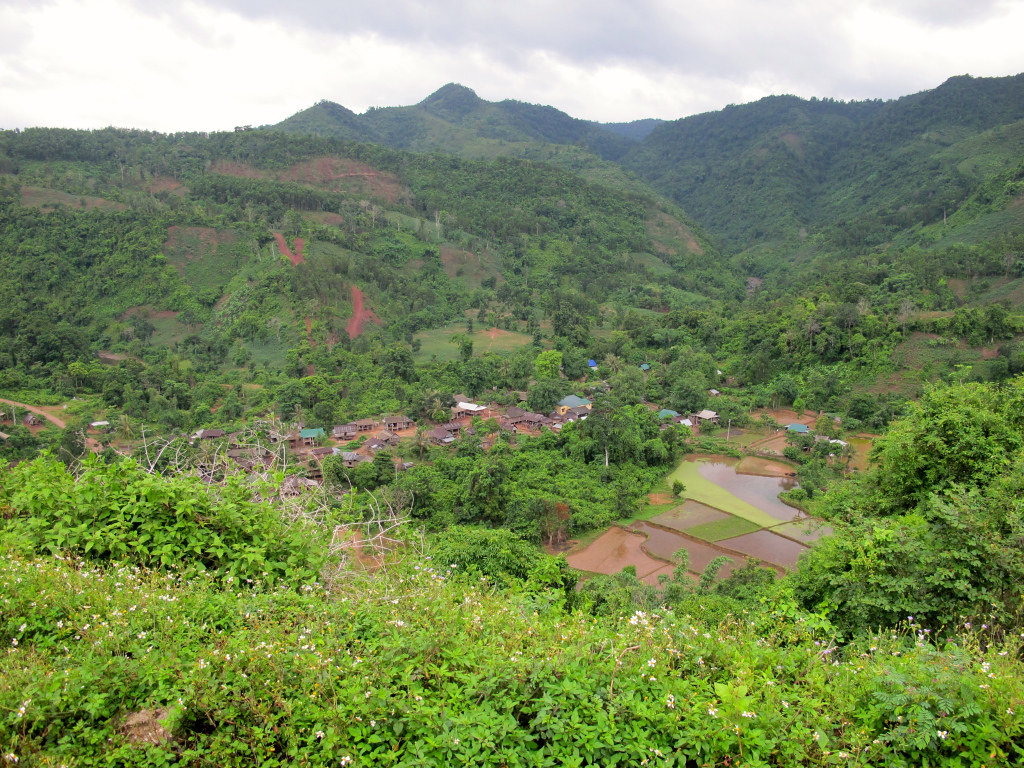
Khe Sanh Coffee Tree – Quang Tri
Khe Sanh is a town in Central Vietnam, in Huong Hoa District, Quang Tri Province. The name Khe Sanh is known to the world through the Khe Sanh Battle in 1968 in the history of the Vietnam War. This place is considered as the “second Dien Bien Phu” or “hell on earth” according to the thinking of the US Marines. Today, Khe Sanh is known for its tourist relics and the potential of the Khe Sanh Arabica coffee brand.
The originator of Khe Sanh coffee tree, some documents say that Eugène Poilane – A French soldier and botanist, he came to Vietnam in 1909 as an artillery worker working for the naval arsenal. Later, the naturalist Auguste Chevalier appointed Poilane as a surveyor for the Institute of Biology, and Poilane became representative of the Forest Service of Indochina in 1922.
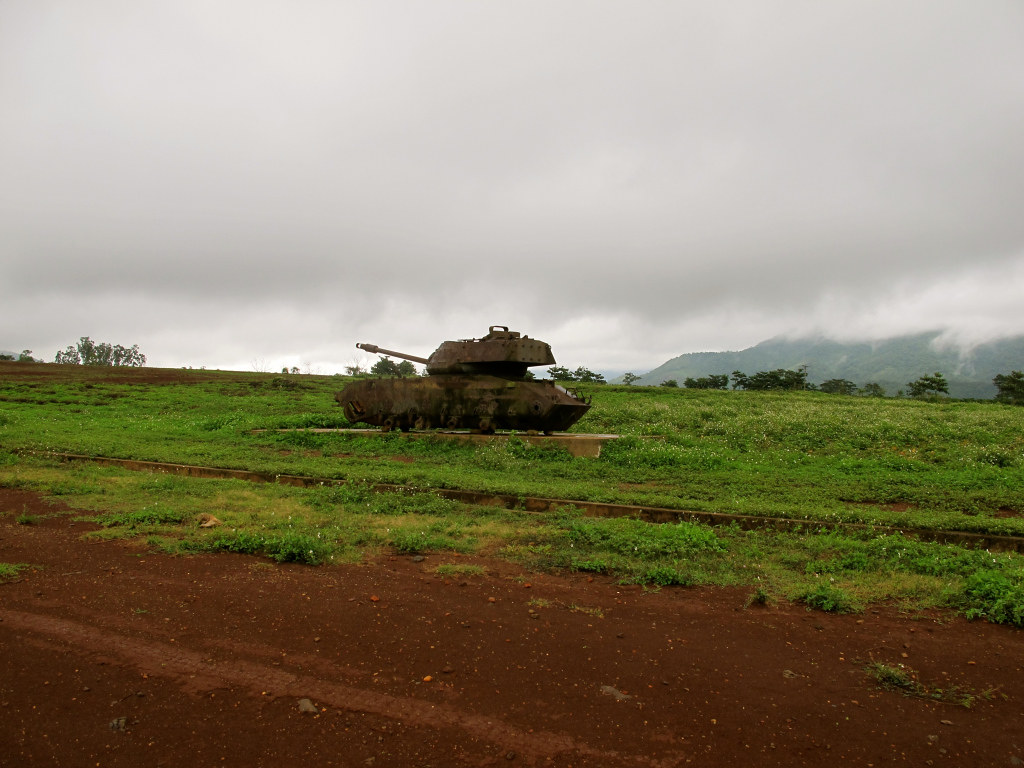
In 1918, Poilane first passed through the area that would later become Khe Sanh village. Attracted by the lush vegetation and thinking that the red soil was suitable for coffee, in 1926 Poilane returned to Khe Sanh and imported Chiari coffee trees to plant and establish the first coffee plantation in Khe Sanh.
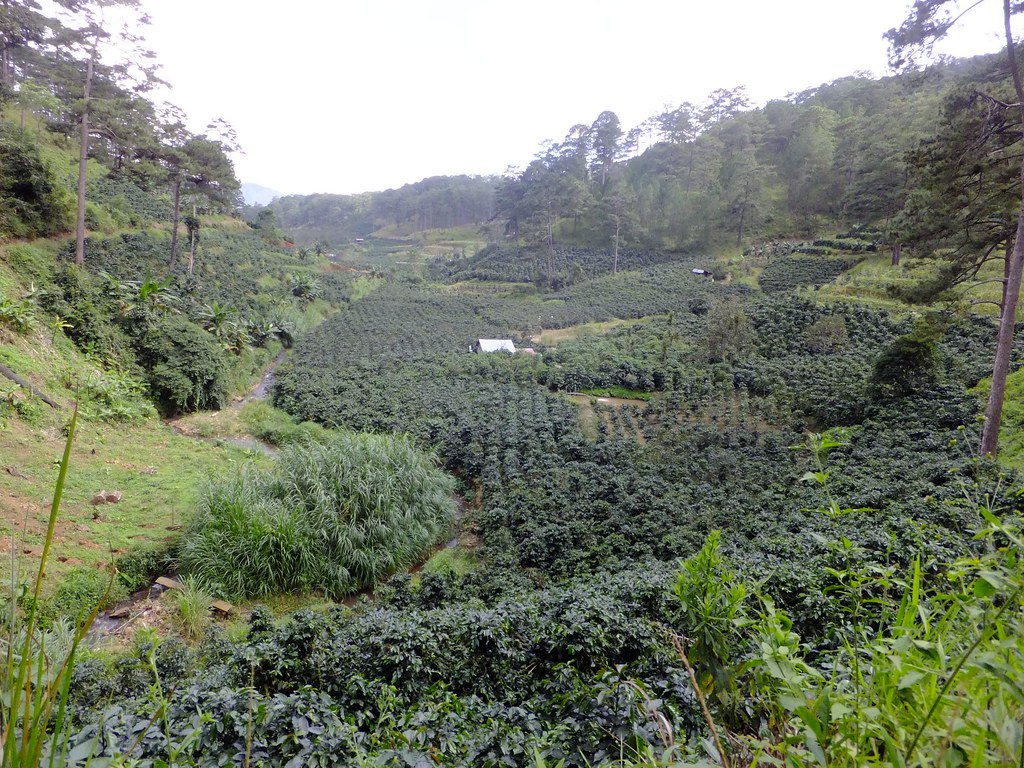
Khe Sanh coffee trees today
To this day, Khe Sanh coffee still holds a pioneering position in the central region’s tea coffee region. The coffee growing area in Khe Sanh is about 4,600 hectares, concentrated in 3 communes: Huong Phung, Huong Linh and Tan Lien; scattered in the communes of Huong Tan, Huong Son, Phung Lam and Huc. Huong Phung commune plays the most important role because it has the largest planting area accounting for 80% of the coffee growing area of Huong Hoa district, the most favorable weather due to the least rain among the communes and finally the suitable altitude, 670m above sea level.
The main coffee variety grown in Khe Sanh has been red-fruited Catimor since 1993, with very few yellow-fruited Catimor. Khe Sanh has experimented with growing Robusta since 1968 but was unsuccessful because the Robusta trees were cross-pollinated and could not withstand drought, culminating in the dry season of 2015 (December 2014 to May 2015) when drought killed all the Robusta trees in Khe Sanh. In 2013, the Tay Nguyen Research Institute successfully hybridized the TN1 variety between Robusta and Typica, which is currently being tested at Tan Lam farm.
Local efforts to develop coffee trees
Since 1998, with the government’s attention and efforts to develop the Lao Bao key economic zone, Khe Sanh Arabica Coffee has been focused on development. Still, there have also been many regrettable marks in the development process, the most prominent of which was the period of 2011-2012 when coffee growers in Huong Hoa were struggling because the coffee crop failed. Prices fell (coffee prices were as low as 7,000 VND/kg). Up to now, despite the remarkable development in reputation, coffee farmers in Khe Sanh still face many difficulties and shortcomings.
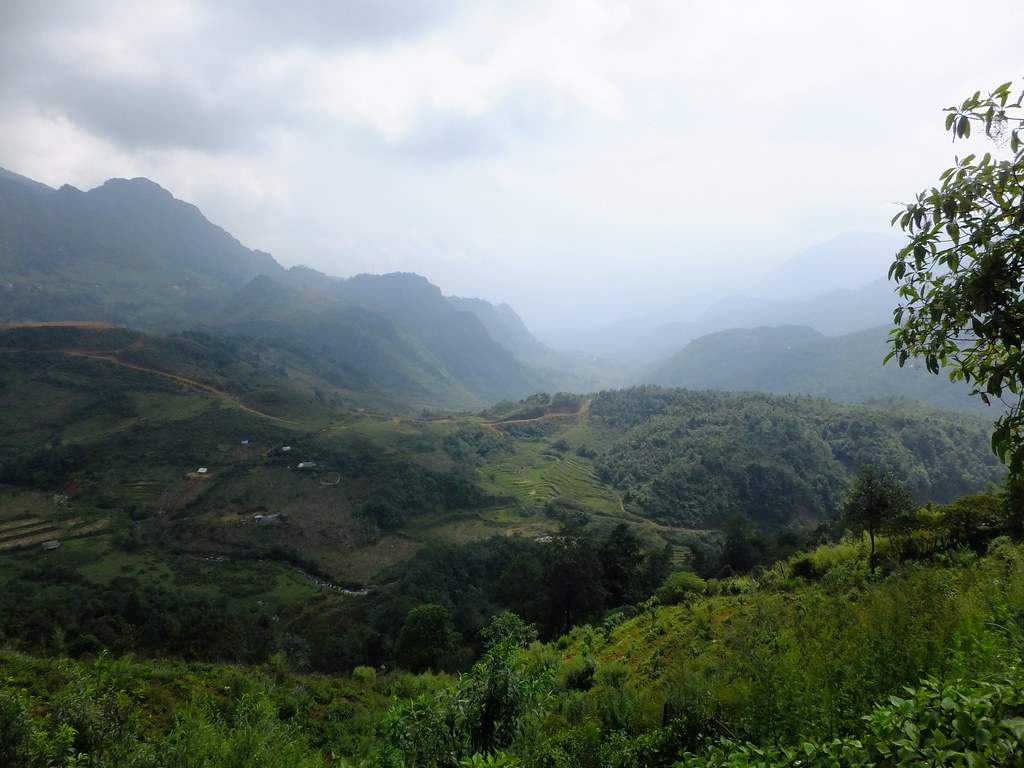
Khe Sanh Coffee Association has 34 members, including processing enterprises and farmers combined with processing facilities. Khe Sanh has 3 coffee bean export factories: Dai Loc, Minh Tien and Thuong Phu, 6 business factories: Acep, Thanh Danh, Tran Thi Huong Trung, Bui Thi Huong Khuong, San Quyet and Vuong Thai, and about 6 more farmers participating in processing coffee beans.
In addition, Khe Sanh has a typical farmer club, from 7-10 farmers coming together to exchange farming, harvesting and processing methods according to the requirements of purchasing and processing enterprises, in the direction of clean coffee, not using herbicides in coffee plantations, limiting the use of chemical fertilizers (gradually replacing with biofertilizers), etc.
The scale of large farms is only about 4-5 hectares/household, so businesses and processing facilities have to purchase from many farmers. Therefore, the quality of fresh coffee is uneven, it is difficult to control the quality of fresh fruit in terms of quality and quantity, and the rate of discarded green fruit is high.